
Publications and Reviews

Decolonizing Central Europe: Czech Art and the Question of ‘Colonial Innocence’
Decolonizing Central Europe: Czech Art and the Question of ‘Colonial Innocence’ by Matthew Rampley
In Search of a Mission: Reflections on the Museum of World Culture and Ethnography in the 21st Century
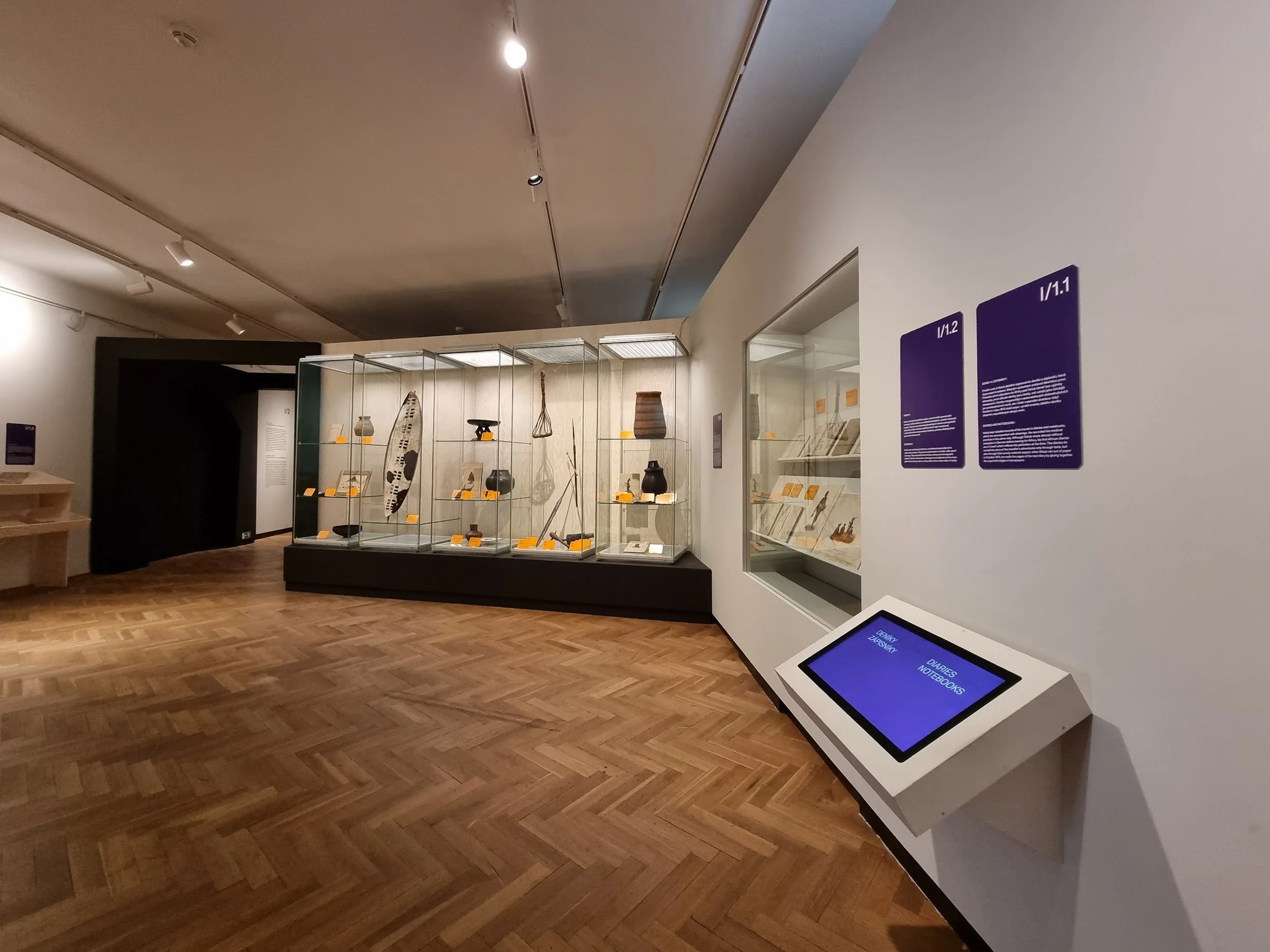
When the exhibition on Emil Holub (1847-1902) opened at the Náprstek Museum of Asian, African and American Cultures in Prague in April 2023 (Figure 1), it was a courageous attempt to view in a more critical way the activities of one of the most celebrated figures in Czech culture of the late nineteenth century. Holub is still lauded across the Czech Republic, in school textbooks, magazines and popular publications, as the Czech ‘David Livingstone,’ the explorer who shared his experiences of southern Africa with the Czech and Austrian publics. Yet just as Livingstone and other imperial figures have come under increasing scrutiny in recent years in Britain, the exhibition in Prague suggested that it was time to undertake a similar examination of Holub’s record.

Decolonizing Central Europe: Czech Art and the Question of ‘Colonial Innocence’
Decolonizing Central Europe: Czech Art and the Question of ‘Colonial Innocence’ by Matthew Rampley

Alois Musil (1868–1944), the Moravian Lawrence of Arabia: The Question of Coloniality in Central Europe
A recurring issue of debate for scholars of Central Europe has been the extent to which analyses of European colonialism apply to Austria-Hungary and its successor states. This article considers this issue in relation to the theologian, archeologist, and scholar of Arabic culture, Alois Musil (1868–1940). Long celebrated in Austria and Czechoslovakia, he has seldom been subject to critical analysis. A loyal Habsburg subject—and confessor to the Empress Zita until 1918—then an enthusiastic promoter of Czechoslovakia and co-founder of the Institute of Oriental Studies in Prague, Musil was a striking example of how individuals in Central Europe adapted to changing political realities. The article focuses in particular on his attitudes to European colonialism. On the one hand, he was critical of British and Italian colonialism, but he worked to further Habsburg imperial interests in the Middle East. When discussing Japanese ambitions in the 1930s, he emphasized the superiority of European colonial rule. He illustrates the complex stance of many Czechs (and other Central Europeans) toward colonialism. They imagined they were innocent of its taint but were in fact enmeshed in it, often endorsing it or acting as agents of the schemes of the European powers.