Tirailleurs: Trials and Tribulations - From Cannon Fodder to Avant-Garde - The Forgotten Soldiers Who Freed Europe (Berlin, 21. 03. 2026 – 14. 06. 2026 )
Berlin’s Haus der Kulturen der Welt (HKW) has long been one of the leading institutions in Central Europe dedicated to presenting global art in a contemporary and critically engaged manner. Originally gifted by the United States to West Berlin as a congress centre in 1957, the building’s iconic hyperbolic paraboloid shell was intended to symbolise openness and innovation. In the context of the Cold War, however, it primarily embodied the close political relationship between the United States and West Germany. Following German reunification, HKW gradually transformed into a symbol of intercultural exchange, positioning itself as a bridge between East and West as well as between the Global North and the Global South.
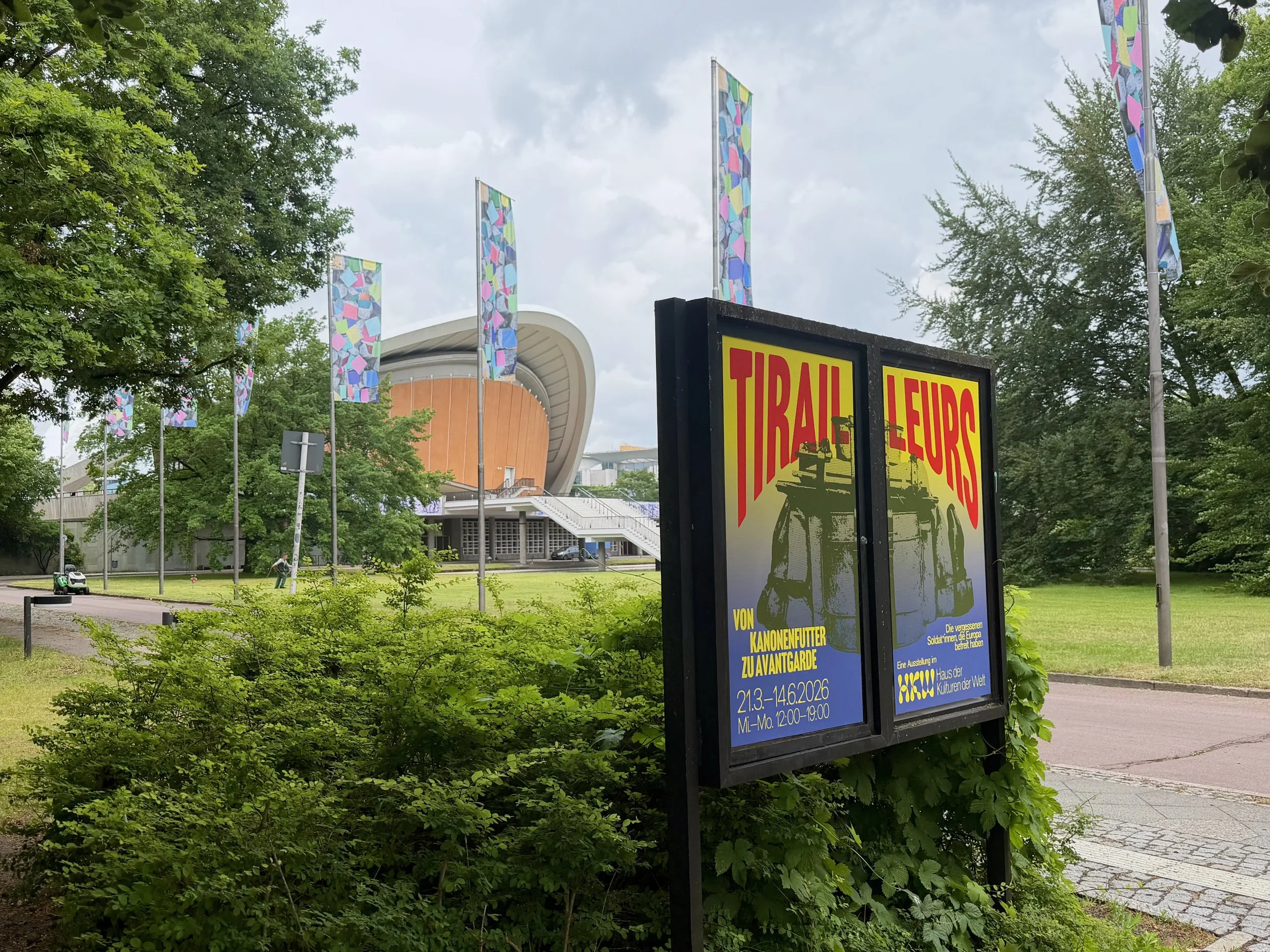
Exterior of the HKW building (all photos used are from the author’s personal archive)
Reflecting this mission, exhibitions at HKW are developed by an international curatorial team that has, in recent years, sought to uncover lesser-known aspects of historical relations between Europe and the Global South. The institution aims to offer more than a purely aesthetic experience: its exhibitions function as research-based projects accompanied by a wide range of public programmes, including academic events, performances, workshops and concerts. As a result, HKW has successfully attracted a remarkably diverse audience, bringing together academics, artists, local communities and visitors of different generations and social backgrounds. Through its programmes, the institution also actively engages Berlin’s migrant communities not only as audiences but also as curators, artists, researchers, staff members and organisers representing a wide range of diasporic experiences.
This institutional profile is closely connected to the work of Bonaventure Soh Bejeng Ndikung, the Cameroonian-born curator who currently serves as HKW’s director and chief curator. Although he only obtained German citizenship in 2006, Ndikung has become one of the most influential figures in the contemporary European art world. As the first non-white director of HKW, he assembled an international team that has significantly contributed to shaping the institution’s current identity. Throughout his career, Ndikung has consistently advocated for cultural institutions that prioritise public engagement and transnational dialogue. He has also served as chief curator of major international exhibitions, including the 2025 São Paulo Biennial and the 2018 Dakar Biennale. HKW clearly benefits from his extensive global network, regularly presenting artists and perspectives that remain underrepresented within European institutions. These broader institutional contexts are also reflected in the exhibition Tirailleurs: Trials and Tribulations - From Cannon Fodder to Avant-Garde -The Forgotten Soldiers Who Freed Europe.
Pushed away from the collective memory
The exhibition focuses on soldiers recruited from European colonies who fought in the armies of imperial powers during various military conflicts. Bringing together the work of more than thirty international artists from different generations, including fourteen newly commissioned projects, it examines the histories of colonial troops through both historical research and contemporary artistic practice. Ndikung served as the chief curator, and the exhibition architecture was designed by Yelta Köm (Studio No Frame), an architect whose practice includes collaborations with numerous major European cultural institutions. The visual identity was developed by Studio Yukiko, which has worked closely with HKW for several years and was also responsible for the institution’s rebranding in 2023.
The term tirailleur first emerged in Senegal in 1857 to designate Senegalese soldiers serving in the French colonial army. Although initially applied exclusively to these recruits, the term was later extended to soldiers drawn from other African colonies as well as from Indochina, Annam, Tonkin and Cambodia. Alongside the history of troops recruited by France, the exhibition also addresses the mobilisation of soldiers by the German colonial administration in former German East Africa and their involvement in the First World War. While the exhibition primarily concentrates on French and German colonial contexts, similar forms of recruitment and military service were also characteristic of the British Empire. These men entered military service through a combination of conscription and voluntary enlistment.
Rather than approaching the Tirailleurs solely as military actors, the exhibition frames their experiences as histories of transnational displacement, forced labour and colonial exploitation. At the same time, it emphasises the forms of political consciousness and self-expression that emerged through participation in wartime conflicts. The curatorial narrative suggests that these experiences contributed to the development of anti-colonial, anti-fascist and Pan-African political movements, positioning the Tirailleurs as historical agents rather than passive victims of empire.
This argument is further developed through the exhibition’s engagement with the concept of the avant-garde. As the curators point out, the term originally belonged to military vocabulary long before it became associated with artistic innovation. In this context, the Tirailleurs are presented as the true avant-garde, whose historical role has gradually been obscured through processes of cultural and historical “whitewashing.” As one of the exhibition texts states: “The Tirailleurs do not need to be avant-garde—they already are.”
The exhibition simultaneously draws attention to the broader absence of colonial soldiers within dominant narratives of European art history. Although twentieth-century European modernism frequently drew inspiration from African and other non-European cultures, the presence of colonial troops within European society remained largely invisible. Félix Vallotton’s depiction of everyday life among the Tirailleurs sénégalais at the Mailly camp in 1917 therefore appears as a rare and significant exception.
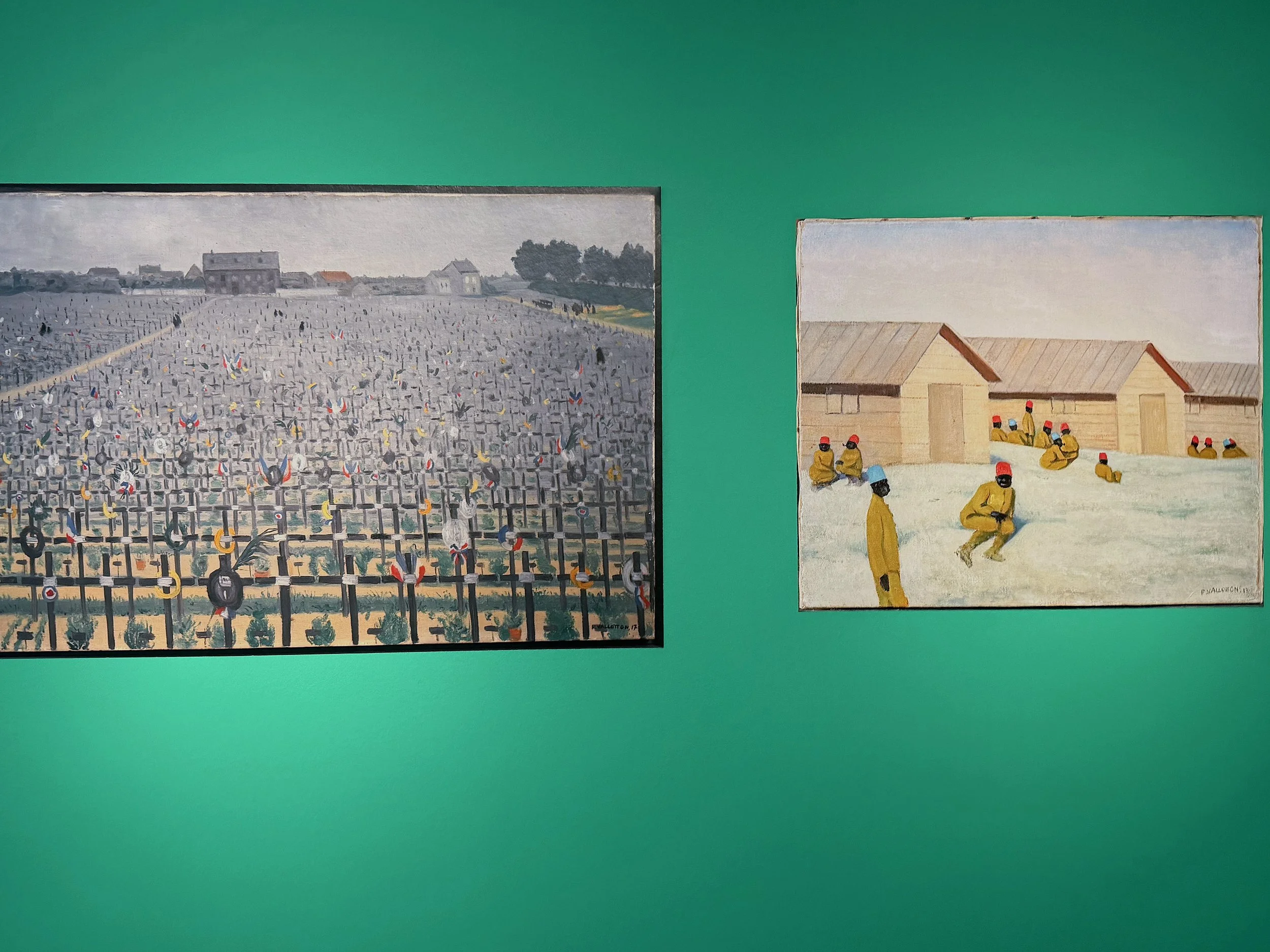
Right: Félix Vallotton, Soldats sénégalais au camp de Mailly (1917), oil on canvas, 55.2 × 66 cm, reproduction (original 46 × 55 cm).
The exhibition is organised into two principal sections. The first, titled Thematic Resonances + Perspectives, offers a historical exploration of the subject through collaborative research developed with five art spaces and collectives based in Dakar, Port of Spain, Marseille, Tangier and Taipei. Bringing together archival photographs, textual sources, films and other audiovisual materials, this section occupies much of the Sylvia Wynter Foyer—the first space encountered by visitors entering the building. Significantly, HKW has made this substantial research component freely accessible to the public. Visitors could easily spend several hours engaging with the materials presented here. Some of the documentary films alone approach an hour in length.
Whitewashing of archives
The section examines how the experiences of soldiers recruited from French and German colonies have been represented, remembered and contested across different historical moments. It also explores their place within contemporary memory cultures, both in former colonial territories and within Europe itself.
The spatial design encourages prolonged engagement with the material. Individual thematic sections are organised around large tables accompanied by C-shaped sofas that partially structure the open foyer space while creating relatively intimate environments for reading, listening and viewing. Archival photographs are displayed directly on the tables, where visitors can consult specialist literature and access accompanying audiovisual materials. Poetry, music and personal testimonies produced by former soldiers further enrich the presentation, offering insight into experiences of separation, displacement and the disappointments many encountered upon returning to civilian life.
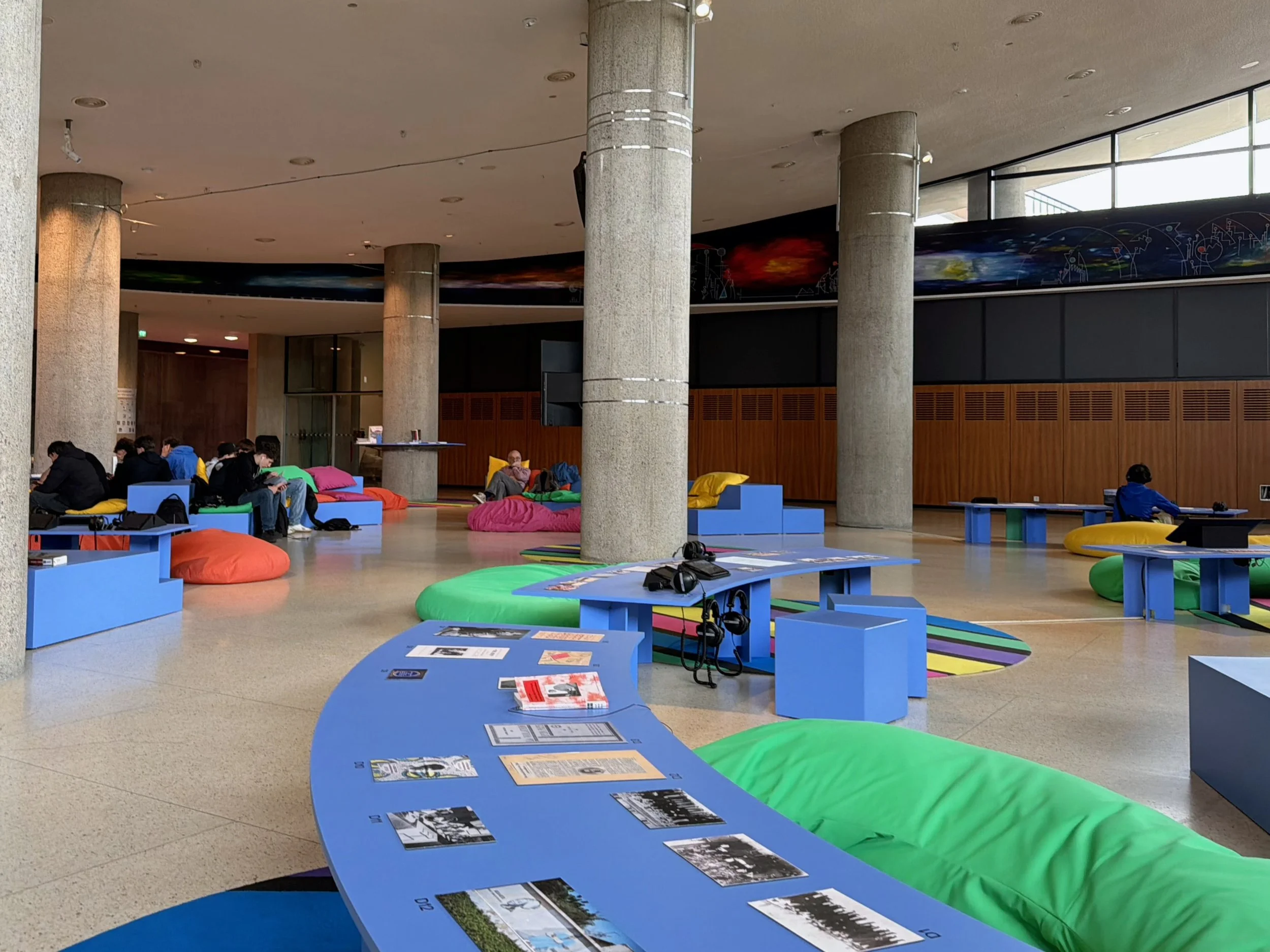
Architectural design of the exhibition section titled "Thematic Resonances + Perspectives"
Alongside historical sources, the exhibition also presents several contemporary films and initiatives dedicated to the histories of colonial soldiers. One example is a documentary focusing on a Marseille-based activist collective that seeks to revive public awareness of these individuals and their experiences. Throughout this section, the accompanying texts repeatedly emphasise that broader recognition of colonial soldiers within Europe emerged only during the last decade, following renewed scholarly and public interest after 2010. At the same time, the curators acknowledge that these histories never entirely disappeared from collective memory in former colonial territories.
The exhibition attributes this asymmetry to processes of historical “whitening” embedded within European memory institutions. The liberation of France in 1944 serves as a particularly striking example. Approximately 250,000 soldiers recruited from French colonies—including Algeria, Cameroon, Guinea, Côte d’Ivoire, Mali, Mauritania and Senegal—participated in the campaign against Nazism. Yet, as the exhibition demonstrates, their contribution was largely erased from official narratives almost immediately after the war. Their sacrifices, experiences and agency were marginalised in public commemorations of liberation and rarely featured in wartime imagery or post-war memory cultures promoted by the Allies.
As becomes evident throughout this section, archival collections contain a substantial body of material documenting the lives and experiences of colonial soldiers. Nevertheless, these sources remained largely overlooked within Europe until relatively recently. The exhibition responds to this absence by foregrounding voices from the Global South, including veterans who recount both their wartime experiences and the profound sense of disappointment that followed. Many expected recognition, rights and social advancement in return for their contribution to the defeat of fascism, only to encounter continued marginalisation after demobilisation.
The curatorial narrative also demonstrates that the significance of the Tirailleurs extended beyond those who directly participated in military service. Their experiences resonated with writers, intellectuals and artists who understood them within the broader framework of colonial exploitation. One notable example is Léopold Sédar Senghor’s 1948 poem Despair of a Free Volunteer, which reflects on the contradictions and disillusionments of colonial military service.
The exhibition further suggests that participation in the struggle against European fascism often became a catalyst for political consciousness among colonial soldiers. The realisation that the defeat of fascism would not necessarily lead to their own emancipation exposed the limits of imperial promises and contributed to the emergence of anti-colonial political movements. At the same time, military service provided many recruits with a unique insider’s perspective on the structures of empire, creating opportunities to critically reassess colonial rule and, in some cases, to participate in subsequent national liberation struggles.
The exhibition also draws attention to the gendered inequalities produced by both colonialism and warfare. These dynamics are explored through the stories of the Madames Tirailleurs, women who accompanied recruited soldiers and whose experiences have often remained marginal within dominant historical narratives. Some of these women were themselves formally recruited to provide nursing care and other forms of support. By foregrounding their stories, the exhibition expands its focus beyond military service alone and highlights the broader social worlds shaped by colonial conflict.
The exhibition further demonstrates how encounters between soldiers from different colonised territories contributed to the development of anti-colonial and anti-fascist networks. These interactions fostered new forms of solidarity among colonised peoples that frequently transcended linguistic, ethnic and regional boundaries. One example discussed in the exhibition is the relationship between Maghrebi, Senegalese and Vietnamese soldiers serving within the French military, whose wartime encounters later informed shared political struggles against colonial rule. In some cases, these connections extended into active support for anti-colonial movements, including Vietnamese resistance efforts.
While the richness of archival material presented in the first section is undoubtedly one of the exhibition’s greatest strengths, it can also become overwhelming. Visitors are confronted with an extraordinary quantity of documents, photographs, films and audiovisual materials, making it difficult to engage equally with every aspect of the research presented. In this regard, HKW’s decision to provide all visitors with a comprehensive exhibition catalogue proves particularly valuable.
At 184 pages, the catalogue functions not merely as supplementary material but as an integral component of the exhibition itself. It allows visitors to revisit themes they encountered during their visit and to engage more deeply with topics that may have received only limited attention in the gallery space. Indeed, the publication effectively assumes many of the functions conventionally fulfilled by wall texts and interpretive panels.
A respectful display of global art
This curatorial approach becomes especially apparent in the second section of the exhibition, where artworks are displayed with minimal textual mediation. While such a strategy may not appeal to every visitor, it is particularly effective in the context of global contemporary art. Exhibitions dealing with non-European histories often rely heavily on explanatory texts that frame artworks primarily as historical or ethnographic evidence rather than aesthetic and conceptual propositions. In doing so, they risk reducing artistic works to illustrative documents. HKW largely avoids this tendency. By relocating much of the contextual material to the catalogue and research section, the exhibition allows artworks to operate more autonomously while remaining embedded within a broader historical framework.
The exhibition extends throughout the HKW building, with several works installed beyond the main exhibition hall. Although this spatial distribution successfully integrates the project into the institution as a whole, it can occasionally prove disorienting. Even with the floor plans and lists of exhibited works included in the catalogue, navigating between individual installations is not always straightforward.
The exhibition also incorporates a walk-through cinema presenting a programme of films dedicated to the histories of the Tirailleurs. The selection includes both contemporary documentaries and fiction films produced during the second half of the twentieth century, many of which explore the social and economic struggles faced by former colonial soldiers after their military service had ended.
Upon entering the main exhibition hall, visitors are first greeted by Daniel Lind-Ramos’s assemblage sculpture Reinventario de la Desmemoria. Commissioned specifically for the exhibition, the work functions as an anti-monument dedicated to the inhabitants of Martinique, Guadeloupe and French Guiana who fought and laboured during the First and Second World Wars. Constructed from wooden crates, fabric sacks, plastic objects, military equipment, a nurse’s cap, boots and coconut shells, the assemblage combines materials associated with both military service and colonial labour. In doing so, it commemorates not only those who served as soldiers but also those who cared for the wounded, supplied provisions and extracted resources essential to imperial war efforts. The inclusion of references to Frantz Fanon’s The Wretched of the Earth further connects these experiences to the emergence of anti-colonial political consciousness.
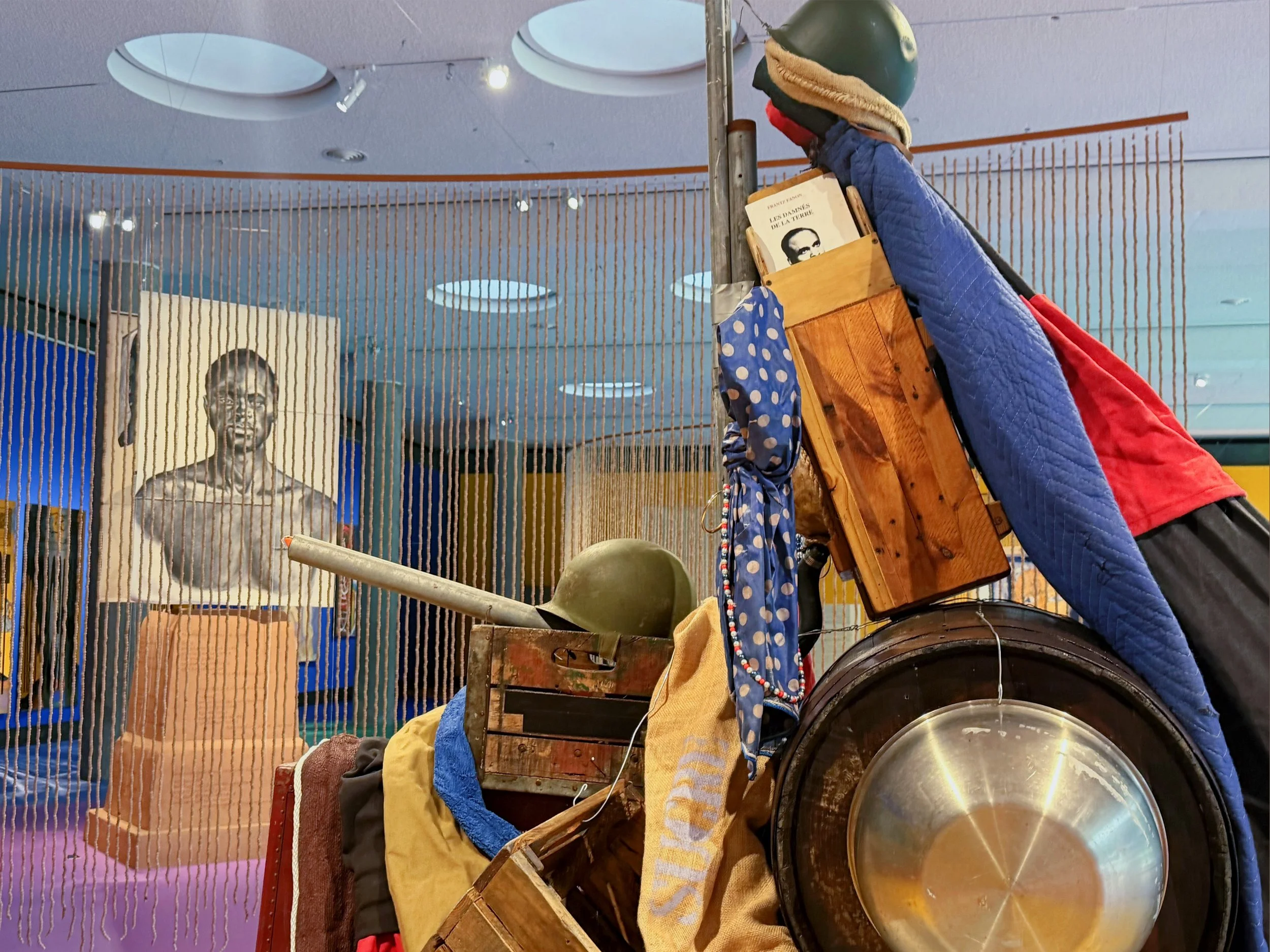
Daniel Lind-Ramos, Re-inventario de la desmemoria (2026), metal tube, coconut shell, wooden boxes, small cloth bags, textile, wooden barrel, plastic, nurse’s cap, army bag, boots, binoculars, burlap sack, rope, cooking pot, trumpet, machetes, 267 × 244 × 244 cm.
Questions of memory and historical erasure also s tructure Dior Thiam’s Tata, whose title derives from the Wolof term for a fortified enclosure or memorial site. Consisting of a clay column covered with photographic portraits, the work reflects on the marginalisation of French colonial soldiers within official historical narratives while drawing on the experiences of the artist’s grandfather, himself a Senegalese Tirailleur. Nearby, Binta Diaw commemorates the Camp de Thiaroye massacre of 1 December 1944, when French colonial forces opened fire on Senegalese veterans protesting unpaid wages and poor living conditions after returning from military service. Rather than adopting the visual language of heroic commemoration, Diaw’s installation - consisting of soil in which a hat typically worn by Senegalese Tirailleurs is placed, and from which a corn plant is growing - centres on absence, vulnerability and the unfinished nature of historical justice.
Several artists further complicate dominant narratives of military history by foregrounding women’s experiences. For this exhibition, Pelágie Gbaguidi created a series of textile collages dedicated to the Madames Tirailleurs, women connected to colonial soldiers as wives, partners, relatives and, in some cases, fellow recruits. Through fragmentary compositions and layered materials, the works recover lives that have frequently remained invisible within both military and colonial historiography.
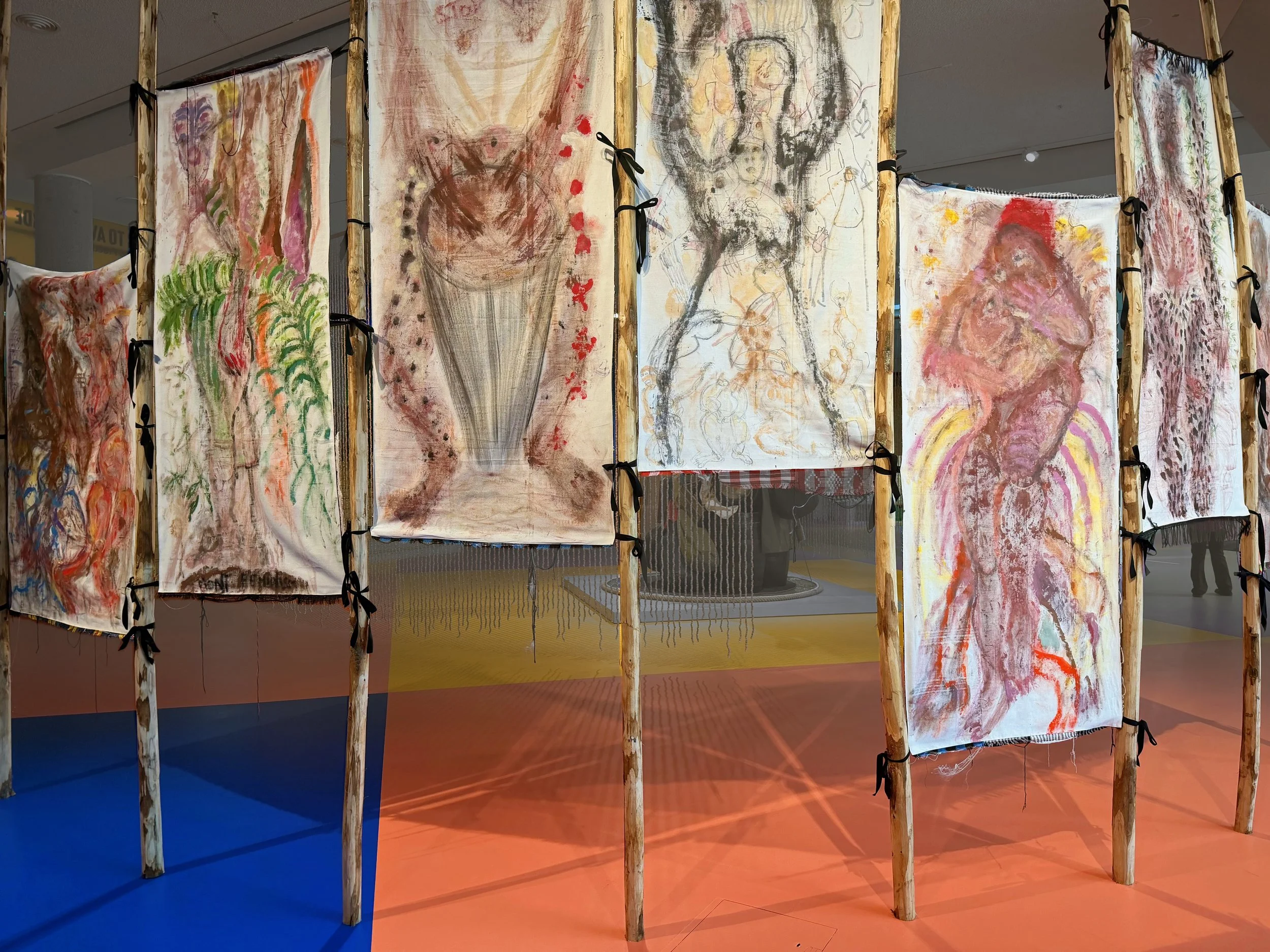
Pélagie Gbaguidi, The Architecture of Courage (2026), wood, fabric, 7 structures, each 200 × 85 cm.
The experiences of women affected by armed conflict also occupy a central place in Mónica de Miranda’s contribution. Installed within a star-shaped architectural structure—a symbol associated with African freedom, unity and leadership—the video work presents testimonies from figures involved in Angola’s liberation struggle, placing particular emphasis on women’s voices. By foregrounding personal memory alongside broader political history, the installation challenges the marginal position often assigned to women within narratives of anti-colonial resistance.
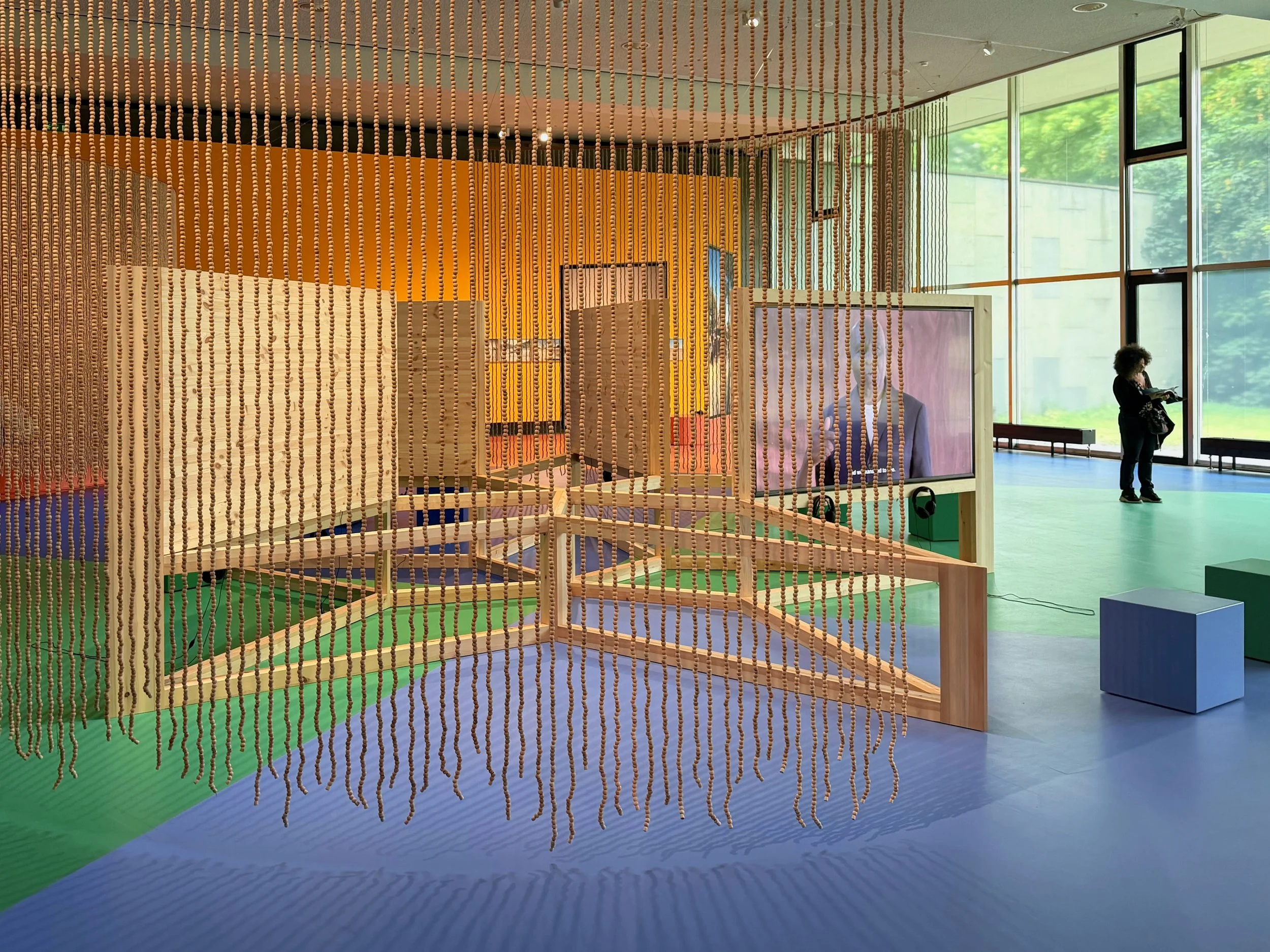
Mónica de Miranda, The Spell Stone (2026), 4-channel video installation, video, wood, dimensions variable, Portuguese with En/Ger subs.
While much of the exhibition focuses on colonial Africa, several artists expand its geographical scope by examining related histories in Asia and the broader colonial world. Among the most compelling contributions is Reverse Jihad by the collective Slavs and Tatars, which investigates the propaganda strategies employed by the German Empire during the First World War. Drawing on a 1915 publication of the same name, the installation revisits efforts to mobilise Muslim prisoners of war held in Germany by circulating multilingual propaganda materials in Russian, Arabic and Turko-Tatar. Through a constellation of mirrors inscribed with Arabic texts and fragments of printed matter, the work highlights the ideological dimensions of colonial warfare and the ways in which imperial powers sought to instrumentalise religious identities for military purposes.
Questions of displacement and gendered violence emerge prominently in the work of Tiffany Chang, whose embroidered map, commissioned for the exhibition, traces the movements of colonial troops, female Vietnamese labourers and imperial powers during the Second World War. By visualising these overlapping trajectories, the work reveals the extent to which military conflict transformed both human mobility and social relations across Asia. At the same time, Chang addresses the history of so-called comfort women—women subjected to sexual slavery by the Japanese military in occupied territories—thus connecting colonial warfare to broader histories of gendered exploitation.
The experiences of comfort women are explored from a different perspective in Hana Yoo’s film I Drank a Magic Potion but I Didn’t Die. Working with archival interviews from the War and Women’s Human Rights Archive in Seoul, Yoo revisits the testimony of Kim Bok-dong, one of the most prominent survivors of the Japanese military sexual slavery system. Through subtle interventions in the structure and rhythm of the archival material, the artist creates space for forms of intimacy, care and intergenerational dialogue that are often absent from official historical narratives. Rather than presenting testimony solely as evidence, the work foregrounds emotional and affective relationships between survivors and contemporary audiences.
Themes of displacement, belonging and transnational solidarity continue in the work of Tuấn Andrew Nguyễn. His video installation Because No One Living Will Listen centres on the story of Habiba, a Vietnamese woman whose father was a Moroccan soldier who defected from the French colonial army. Structured around a speculative letter addressed to a father she never knew, the film explores the emotional and historical consequences of colonial mobility across generations. Habiba’s search for her father’s lost grave becomes a meditation on memory, migration and the impossibility of fully belonging to either of the national communities that shape her identity.
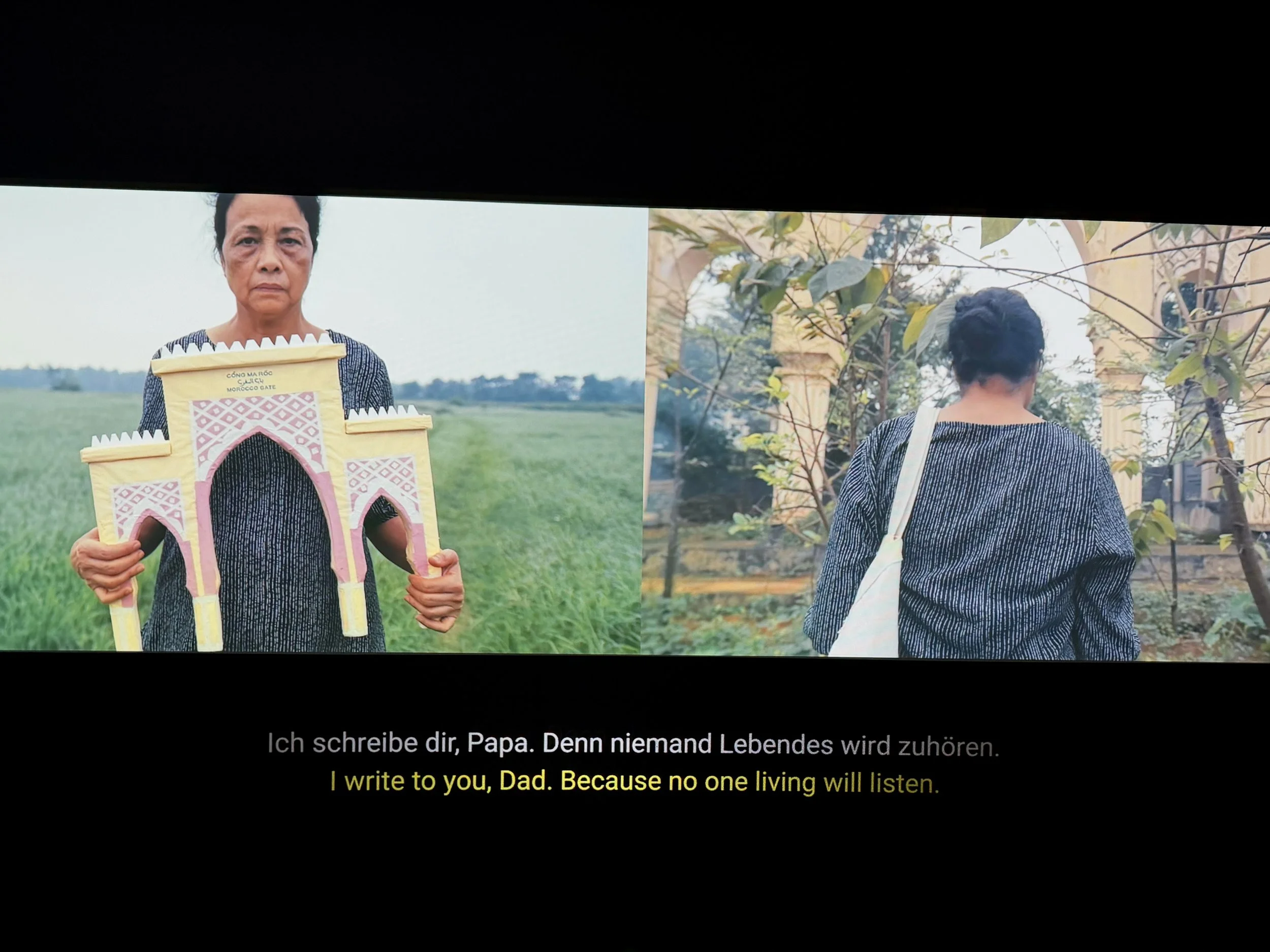
Tuấn Andrew Nguyễn, Because No One Living Will Listen / Người Sống Chẳng Ai Nghe (2023), video still.
The exhibition concludes with works by El Hadji Sy, one of Senegal’s most influential contemporary artists. The selection includes paintings produced between 2017 and 2021 that engage with questions of embodiment, postcolonial subjectivity and the legacies of colonial history. Unlike many of the other artists featured in the exhibition, El Hajdi Sy does not directly address the history of the Tirailleurs, making his inclusion somewhat less immediately apparent within the overall curatorial framework. Nevertheless, his work reinforces the exhibition’s broader engagement with African modernisms and postcolonial cultural production. For audiences in the Czech Republic, El Hajdi Sy may be a familiar figure due to his 2016 solo exhibition at Prague’s National Gallery, one of the very few presentations of a Sub-Saharan African artist to have been organised by a major Czech art institution in the twenty-first century.
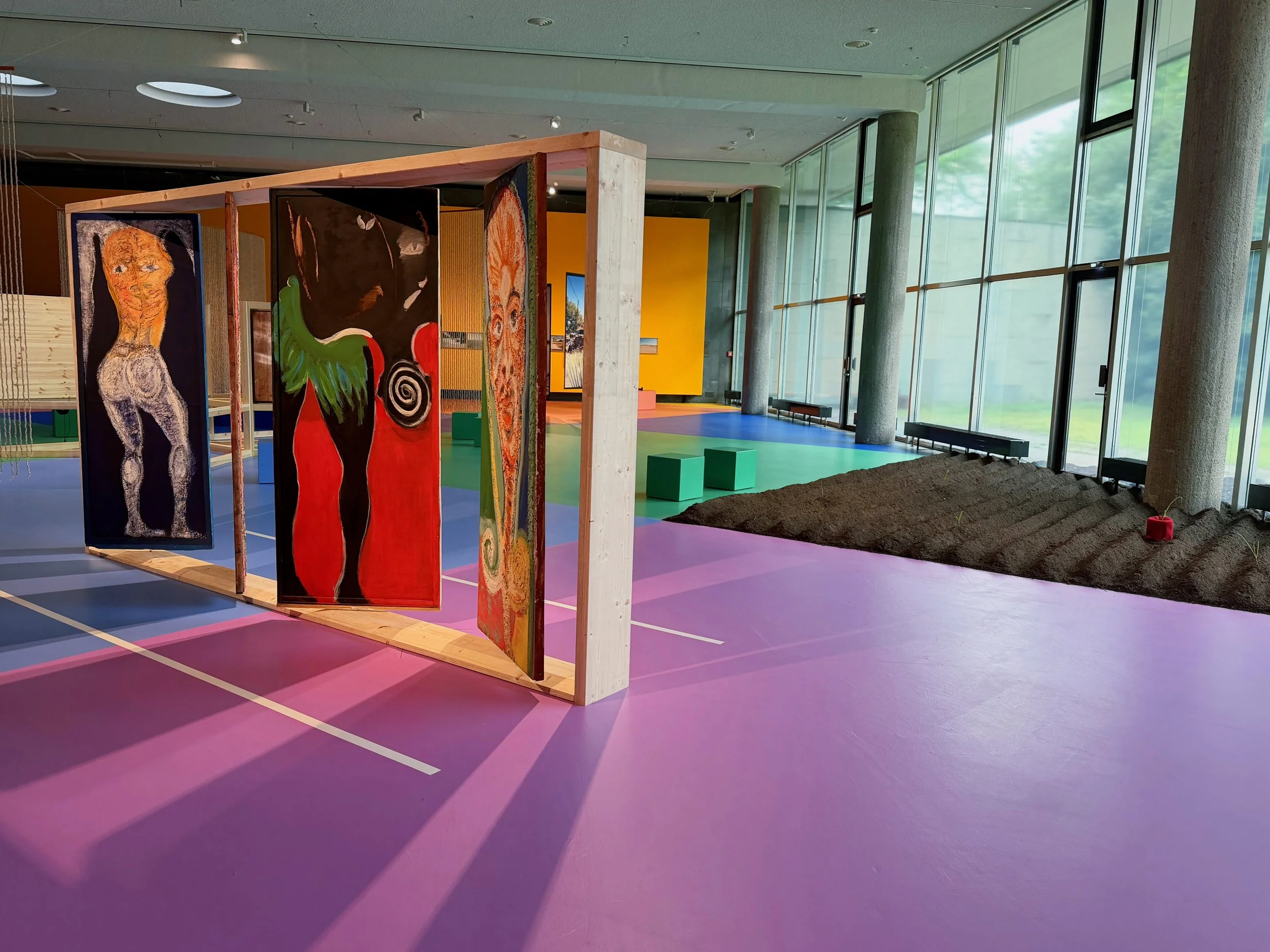
Left: El Hadji Sy, Untitled (2019), installation, 4 door paintings, acrylic on wood, frame, each c.205 × 80 × 3.5 cm.
Right: Binta Diaw, 1.12.44-1 - Édition 1/3 (2021)
As a multidisciplinary institution, HKW occupies a distinctive position within the contemporary European museum landscape. Unlike institutions such as the Humboldt Forum, which continue to grapple with the legacies of colonial collections and ongoing debates surrounding restitution, HKW is not burdened by a substantial collection of colonial artefacts. This relative institutional flexibility enables it to experiment with alternative curatorial approaches and forms of knowledge production.
In this sense, HKW has emerged as one of Central Europe’s most significant centres for decolonial cultural practice. Through both its exhibitions and publications, the institution consistently creates space for perspectives that have traditionally remained marginal within European cultural and memory institutions. The Tirailleurs project exemplifies this approach. Combining rigorous historical research, contemporary artistic production and innovative exhibition design, it foregrounds voices and experiences that are still frequently absent from dominant narratives of European history.
Although the sheer volume of material can at times be overwhelming and the spatial distribution of works occasionally challenges visitors’ orientation, these are minor shortcomings within an otherwise ambitious and intellectually compelling exhibition. Ultimately, Tirailleurs: Trials and Tribulations - From Cannon Fodder to Avant-Garde-The Forgotten Soldiers Who Freed Europe not only recovers overlooked histories of colonial military service but also demonstrates the continued relevance of artistic and curatorial practice as tools for critically rethinking the relationship between memory, colonialism and historical representation. The exhibition further confirms HKW’s position as one of the most innovative and intellectually engaging exhibition institutions in Europe.
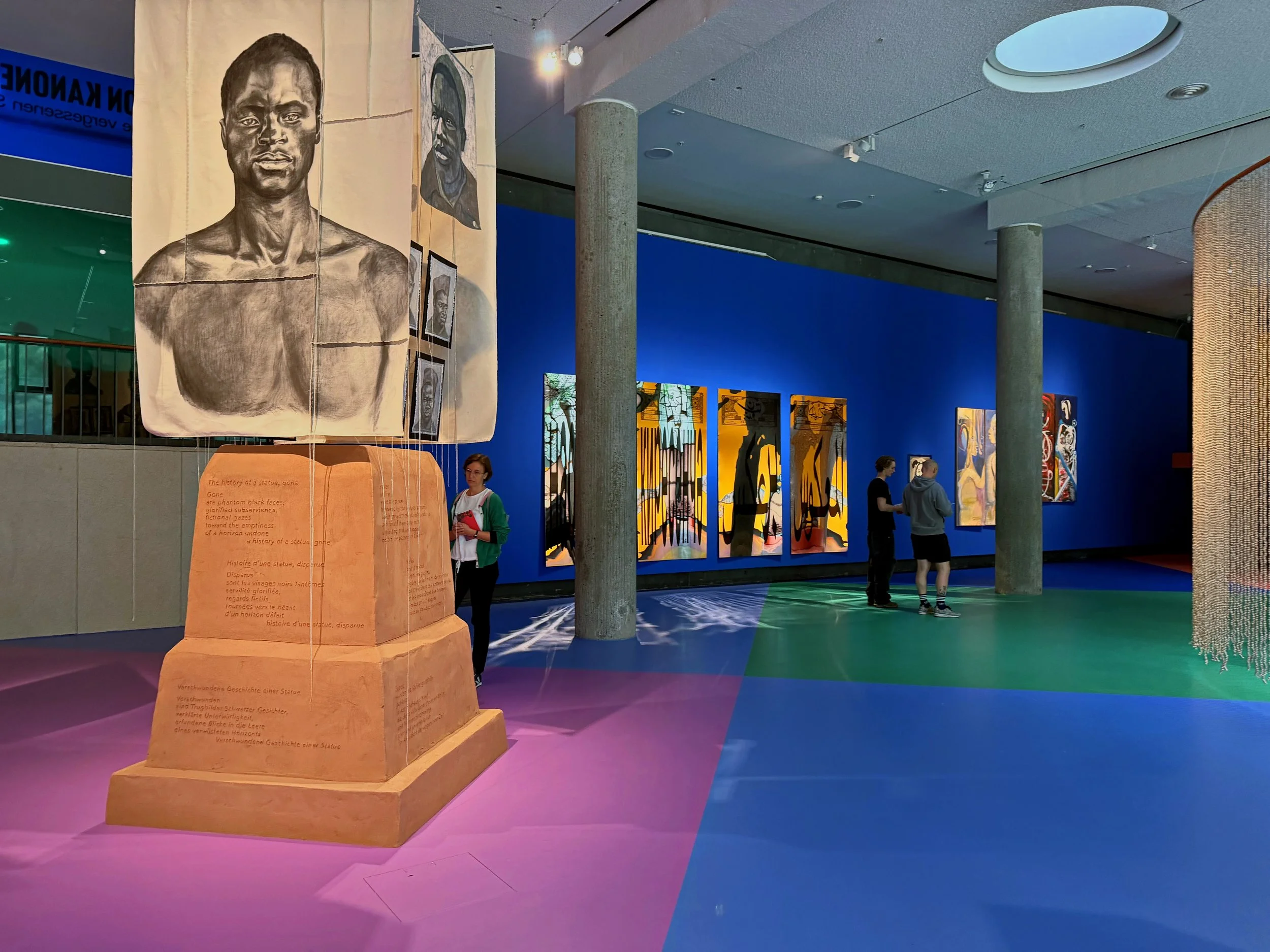
In the front: Dior Thiam, Tata (2026), acrylic, charcoal, glue, and wax-print on canvas, cotton thread, wood, clay, 360 × 140 × 140 cm.
In the back: Slavs and Turks, Reverse Dschihad (Russian) (2015), screenprint on polished steel, 244 × 122 × 0.1 cm; Reverse Dschihad (Tatar) (2015), screenprint on polished steel, 244 × 122 × 0.1 cm; Reverse Dschihad (Urdu) (2015), screenprint on polished steel, 244 × 122 × 0.1 cm; Reverse Dschihad (Arabic) (2015), screenprint on polished steel, 244 × 122 × 0.1 cm.
Artists: Kader Attia, Yassine Balbzioui, Kathleen Bomani, Halida Boughriet, Tiffany Chung, Binta Diaw, Godfried Donkor, Juan-Pedro Fabra Guemberena, Abrie Fourie, Othon Friesz, Pélagie Gbaguidi, Nadia Kaabi-Linke, Daniel Lind-Ramos, Anguezomo Nzé Mba Bikoro, Mónica de Miranda, Oscar Ngu Atanga, Tuấn Andrew Nguyễn, Josèfa Ntjam, Mario Pfeifer, Slavs and Tatars, El Hadji Sy, Pascale Marthine Tayou, Dior Thiam, Barthélémy Toguo, Félix Vallotton, Francisco Vidal, Hana Yoo