Introducing our external collaborator Irene Appeaning Addo: On postcolonial architecture, urban inequality, and Ghana-Czechoslovakia collaboration in the 1960s

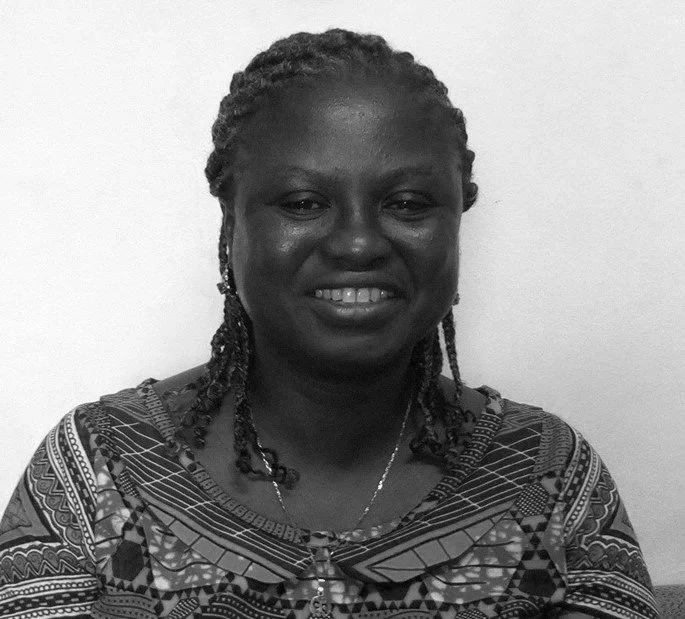
What can postcolonial architecture show us about inequality in African cities? And what role did Czechoslovak experts play in Ghana’s development in the 1960s? In this interview, conducted by Anna Řičář Libánská, we introduce one of our external international consultants, Irene Appeaning Addo, who is an architect and researcher at the University of Ghana. She discusses her work on African urbanism, shares insights from her current projects on climate adaptation and architectural education, and reflects on the architectural and technical cooperation between Czechoslovakia and Ghana during the Nkrumah era.
Anna Řičář Libánská: Your area of expertise is urbanism in African cities. How did you get into this topic?
Irene Appeaning Addo: Thinking about it now, I realise how much my studies have actually shaped my journey. I completed my undergraduate studies at University of Science and Technology (Kumasi, Ghana) in 1994, specializing in architecture. At the time, the programme was called a Bachelor of Science in Design. After that, I pursued a postgraduate diploma in architecture. This was the period when post graduate diplomas in architecture were awarded, although now they award Master of Architecture. So, by the end of 1999 I had completed a six-year course in architecture at the university.
Then in 2001, I went on to do a master's degree in Housing and Inner-City Revitalisation at the Institute for Housing and Urban Development Studies (IHS) in Rotterdam. I finished that programme back in 2002. Then, in 2008, I began my PhD at the University of Ghana, in the Geography Department. You can see that my interest in urbanism really began during my time in Rotterdam. The program I took there focused on Housing and Inner-City Revitalisation and this introduced me to topics like urban landscapes, revitalising cities, and economic development. That’s when my passion for studying urbanism in cities truly started.
During my PhD, I narrowed my focus to urban low-income housing provision, continuing the theme of urban development but with a specific emphasis on housing. Interestingly, looking back, I realized that even from my undergraduate thesis on urban landscapes and throughout my master's and PhD research, I had consistently been engaging with themes related to housing and urban development. I had been studying urbanism all along, even before I consciously identified it as my research focus.
After completing my PhD, I became even more deeply involved in urban studies. Around 2015, I noticed that urbanism had become a particularly topical issue. In 2018, I participated in a five-year project funded by the Andrew W. Mellon Foundation, which involved researchers from multiple African cities including Cape Town, Kampala, Lagos, Nairobi, and Accra. The project explored urbanism through the lens of art and architecture. That initiative really deepened my understanding of urbanism in African cities and solidified my engagement with the field.
AŘL: How did your involvement in the Mellon Foundation project influenced your understanding of urbanism in African cities, especially in terms of the social, political, and economic aspects?
IAA: So both social and political—and let’s say economic—aspects of city planning influenced my understanding of African cities urbanising. We were all looking at how our different cities, in different African countries, were urbanizing and changing. And we all saw that there’s always the political aspect, there’s always the economic aspect, and then there is also the inequalities in cities that we need to deal with. So that’s where the social aspect comes in. And that really helped us to appreciate and understand how our African cities were urbanizing and how that differently shaped the planning of our cities.
But the main argument we put forward was this: that if we look at our cities through the lens of the arts—different forms of art, like visual art, films, and so on—then we can justifiably say that governments cannot simply use international standards and policies to draw rigid lines between places they designate as rural and those they designate as urban. We felt that the rigid line blurs out. There isn’t that clear divide. It just blurs out if you are implementing a planning strategy. This is because the kind of films people watch in the supposed rural areas might be the same films watched in urban areas. The kinds of attitudes or behaviors you find in so-called rural areas can also be found in urban areas. Many activities happening in the so-called rural areas is also happening in the urban areas. So, for us, in that project, we concluded that it is a city-level issue—not necessarily an urban–rural issue.
AŘL: You're also an architect. Do you work as an architect alongside your research?
IAA: I actively practiced as an architect—right up to the level of a principal architect in an organization in Accra, before I moved to the University of Ghana. So, after school, around 1999, I joined a government organization. It’s technically a government agency, but we worked to pay ourselves, so we usually described it as a parastatal organization. The name of the organisation is Architectural and Engineering Services Limited (AESL). I started there as an assistant architect, wrote my professional exams, and passed in 2001. Then I was promoted to the rank of an architect. Later, I got promoted again to senior architect, and then to principal architect. By the time I was leaving, I was actually the Greater Accra regional architect. This was over a 15-year period, from 1999 to 2014. I really practiced architecture full-time until I moved to the University of Ghana in 2015. Currently, my architectural practice is less, doing personal jobs and designing residences for acquaintances.
AŘL: In our research project, we’re focusing on the role of the Czechs—or Czechoslovaks—in Ghana’s development during the 1960s. Could you provide a brief overview of what that cooperation entailed?
IAA: Yes, but the topic is quite broad. I’ve been reading around it, and I realized that the Czechs were involved in so many areas, especially during the 1960s.
I took down some notes—it’s very interesting. I saw that they were setting up industries, they were involved in infrastructure projects and so on. For example, there’s the Kumasi State Footwear Corporation—it was set up by the Czechs. They also helped establish the Komenda Sugar Factory, which is a well-known sugar factory in Ghana. And then there’s the Bonsa Tyre Company. So, they were very much involved in manufacturing.
They were also active in academic institutions—such as helping to set up the science department in one of the public universities. It’s clear the Czechs played a significant role in Ghana’s development, and it's broader than I initially thought.
So now, I’m thinking of focusing more on the arts and architecture side of things—which is where your project comes in—and exploring their involvement in those areas. If I find that their contribution in arts and architecture is limited, then I’d also like to focus on the government organizations where they may have provided technical assistance. For now, that’s where I’m thinking of going—looking into what role they played, how they contributed, and gathering any other information I can find. Sometimes it’s a bit difficult getting material from our archives over here, but I’ll dig into whatever sources I can access.
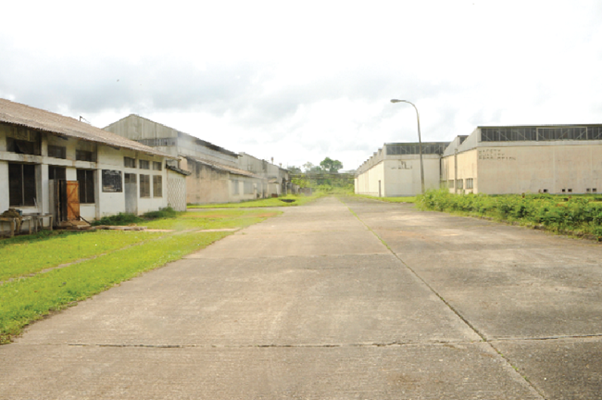
Figure 1: Abandoned structures of Bonsa Tyre Factory. (Source: Graphic Online, May 2017)
AŘL: Given the scattered nature of archives and sources, how do you approach researching and piecing together information for projects like this?
IAA: I’d say it could be laborious—if I should use that word—laborious, because you have to gather the information from different sources and then try to piece them together. You’re not likely to find everything in the National Archives, which is quite interesting. Sometimes, you might come across someone who worked with others involved in those projects, and it’s through those kinds of encounters that you get useful information from other sources—which I think is very good. Also, when it comes to institutions, like the public university I mentioned earlier, it means I would have to go there and try to go through their institutional archives. So, the archives are scattered, and they’re not all together in one place. And I think it’s like that in other countries, too.
AŘL: Is the involvement of Czechoslovaks and other Eastern Europeans in Ghana’s development during the 1960s a well-researched topic in Ghana? Would you say it’s widely studied in the academic community or more of a niche area?
IAA: There's a lot of research by Ghanaians about Ghana's relations with the UK and America, but not so much with Eastern Europe. There's some research on Eastern European architects and their involvement in Ghana's development. Lukasz Stanek has extensively written about Eastern European presence in Ghana with specific reference to the Polish and others. But beyond that, I don't think many people are doing much research on Eastern Europe's role in Ghana’s development. Others are also studying their influence in Nigeria and there is an article by Moravánszky, Ákos, titled "Peripheral modernism: Charles Polónyi and the lessons of the village”. There’s another researcher, Mojca Smode Cvitanović, who recently wrote a paper "Tracing the Non-Aligned Architecture: Environments of Technical Cooperation and the Work of Croatian Architects in Kumasi, Ghana (1961-1970)”. And just recently, another researcher expressed interest in looking at Eastern European relations with Ghana, especially in terms of the arts. So, the interest is now beginning, not so much among Ghanaians, but among researchers outside the country. As it stands now Lukasz Stanek is the main researcher looking into Eastern European connections with Ghana.
AŘL: How is Nkrumah-era construction, especially projects involving Eastern Europeans, viewed in Ghana today by both the public and professionals? Is this even a topic of discussion?
IAA: Most people in Ghana don’t talk much about Eastern Europe’s involvement in development. They recognize that Eastern Europeans were here, but they don’t discuss it much. Maybe it’s because the people who came were ‘silent’.
Also, our colonial history plays a role in that silence. We tend to associate a lot of projects with the British, so the debates usually focus on the British and the Americans—not so much about the Eastern Europeans. When Eastern Europe is mentioned, it’s often in the context of socialism. That’s where the conversations happen. And because of that, not many people have really researched Eastern European involvement in our architectural and urban spaces. So, overall, we haven’t done much research in that area as Ghanaians.
AŘL: Based on your preliminary research, did the architectural approaches of British, American, and Eastern European architects differ in Ghana, especially regarding design, materials, and adapting to the local climate?
IAA: I don’t think there was much difference. All the foreign architects were working within the modernist architecture movement, so that influenced the kind of architecture they produced here. Maybe the British architects—like Jane Drew and Maxwell Fry—added their own layer by incorporating the idea of tropical architecture. They believed the climate should be taken into account when planning and designing facilities.
In fact, these architects—British, American, Eastern European—were often working together. For example, at Kwame Nkrumah University of Science and Technology’s architecture department, they were all lecturers sharing ideas. So, they influenced each other and merged their ideas. Unless you knew the specific architect, you probably wouldn’t be able to tell if a building was designed by a British, American, or European architect.
So, it wasn’t very obvious or clear-cut. The architecture mainly reflected the modernist style of that period, rather than the nationality of the architect.

Figure 2: Maxwell Fry and Jane Drew. Mfantsipin School, Cape Coast (1947). (Source: V&A Museum)
AŘL: It’s really interesting—and maybe surprising to some—that architects and experts from both the Eastern and Western Blocs were actually sharing ideas and cooperating closely.
IAA: Yes, maybe that cooperation was partly because of the academic environment—they were all teaching together, right? I don’t have much information about they working together directly in the public institutions. What I do know is that after 1960, the British left, and then Europeans came in, including Eastern Europeans, who arrived around 1968 to take on roles. That period is quite distinct—very few British or Americans were around when the Eastern Europeans arrived.
The Eastern Europeans, in particular, came offering scholarships, technical support and training opportunities. I would say it was more a form of cultural diplomacy—they tried to introduce their skills, technologies, and expertise by training people, giving scholarships so they could learn the skills abroad and then come back and apply them here. That’s essentially what happened.
AŘL: I see that the urbanism of African cities is a topic with which you continue to engage. Could you tell us about other projects you're currently working on?
IAA: Besides this project, I’m involved in three others. One is called Tuve Pamoja, which focuses on four African cities: Lusaka in Zambia, Cape Town in South Africa, Nairobi in Kenya, and Accra here in Ghana. We’re looking at nature-based solutions to climate change challenges in these cities. Specifically, we want to understand how government officials perceive and use nature-based solutions—things like green architecture or planting trees—especially in managing climate change challenges in informal settlements. For example, what strategies are being used to address climate change challenges? Are they planting trees or greening the area? This is a two-year project; we’ve completed one year, so we have one more to go.
I’m also working with a team of architects from the University of Liverpool on a project aimed at teaching young architects and architecture students how to write about buildings. We noticed that on the continent, many young architects don’t write about buildings or architectural history, so we started this writing workshop series back in 2018. We held workshops in 2018, 2019, then took a break in 2020 because of COVID. We resumed in 2021, 2022, and 2023, and we’re planning one more workshop this July to wrap up the program. We bring together students from mainly architecture and other disciplines and teach them how to observe buildings and write short articles about them, starting with the buildings on their university campuses.
The third project is an Institute led project, where we are exploring indigenous knowledge systems in addressing climate change challenges across Ghana, Nigeria, and Tanzania. We know these practices exist, but we want to see how much they are included in school curricula, if at all. Our goal is to understand the role indigenous knowledge plays in climate change adaptation and how education incorporates this.
Recently, I presented some papers that reflect the dynamics of our cities. Just last week, I presented another paper on one of Accra’s markets that got burnt, and how market traders collectively used innovative methods to rebuild it. So, I study urbanism from different angles, and I’d be happy to share more information if you’re interested. (Irene shared links to the projects she mentioned in the interview.)
AŘL: Thank you very much! Could you also share an interesting book that you've read lately and would recommend to our readers?
IAA: I recently read a very interesting book called Creative Cities in Africa edited by Noëleen Murray and Jonathan King. The book is a collection of essays that explore urbanism and creativity in about seven to eight different African cities.
One chapter that really stood out to me is about Guinea-Bissau. It tells the story of Miriam Makeba, the famous South African musician who went into exile during apartheid and lived in Guinea-Bissau for a time. The president of Guinea-Bissau then, Luis Cabral’s successor—I think it was Vieira—gave her a place to build a house. But after some time, Miriam became unhappy with the political situation there and eventually left, leaving behind this beautiful house.
The chapter explores how an artist portrayed different parts of Miriam Makeba’s house to tell her life story, her exile, and how the political context influenced the architecture of her home. It’s a fascinating blend of biography, politics, and architecture.
There are other chapters, too, such as one about a place in South Africa called Peterson Square. Overall, the book showcases how creativity emerges in African cities, even in places where things might seem challenging. It really influenced my recent presentation on how market traders in Accra creatively came together to rebuild a market after it got burnt.
I would highly recommend it to anyone interested in African urbanism, architecture, and the creative ways people shape their cities.
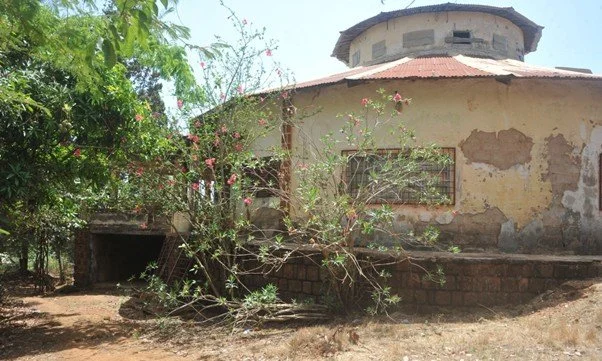

Figure 3: Ângela Ferreira. Angela Miriam Makeba’s house in Guinea-Bissau (2019). (Source: Culturgest, Porto)