
Dr. Jana Švantnerová has joined the project team
We are pleased to announce that Dr. Jana Švantnerová has joined the Czechs and the Colonial World team!
Jana has extensive experience as curator and researcher working in museums in Slovakia, including the Slovak National Gallery, the Bratislava Jewish Community Museum and the Bratislava City Museum. Jana had led or co-curated numerous exhibitions, including: Fruits of Discord: Portraying the Ottoman Presence at the Slovak National Gallery (December 2024 – May 2025) and a 4-year project dedicated to the history and collection of the Prešov Jewish Museum (2018 – 2021) at the Bratislava Jewish Community Museum. Based on her online published article titled Seven Examples of Cultural Inclusion Art in early 2021, the project Inclusive Art and Culture was launched in the Slovak National Gallery focusing on socially engaged topics such as migration, climate crises and decolonisation. She is also the curator of the exhibition Životopisy ľudi a vecí / Biographies of People and Things at the Bratislava City Museum, which opened in May 2025 and continues until April 2026. It is an exhibition on the provenance research of non-European objects in the collections of the Museum and the present-day non-European collecting. We asked her to say a little more about the exhibition:
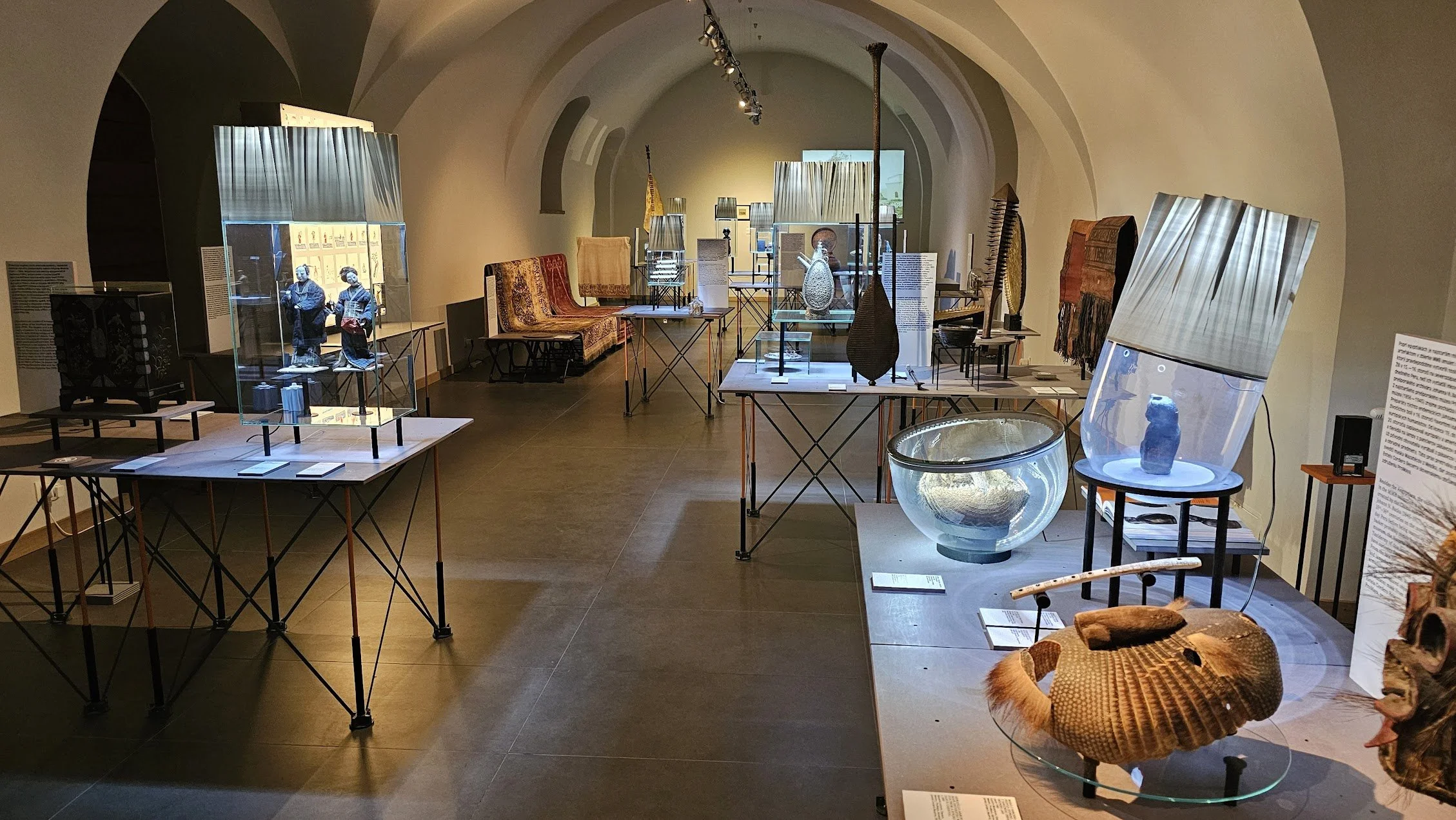
Životopisy ľudi a vecí / Biographies of People and Things at the Bratislava City Museum © Matthew Rampley
Could you say something about the exhibition, about what its aims are, the kinds of questions it is asking?
The starting point of the research project was a simple question: are there any non-European objects in the Bratislava City Museum (Múzeum mesta Bratislavy), and how did they come to be there? Founded in 1868, the museum is the longest continuously operating museum in the territory of present-day Slovakia. It developed within a long-standing collecting tradition cultivated by the nobility and the intellectual elite.
I was intrigued by the presence of non-European artefacts in an institution primarily dedicated to local history. The wide social spectrum of donors provided an ideal platform for researching and presenting the phenomenon of fascination with otherness and the social prestige associated with collecting such objects. Thorough research into individual artefacts—their original function and meaning, the circumstances of their creation and acquisition, and the cultural and social atmosphere in which they were collected—became a valuable source of knowledge not only about other cultures but also about our own. My aim was to present this mosaic-like picture.
Where did the idea of organising the exhibition come from? When you suggested it to the museum, how did they react?
At the end of 2022, I proposed the idea of conducting provenance research on the collection of materials from outside of Europe to the museum. They responded positively, aware of current trends in museology. My interest in the topic was rooted in earlier work with collections of global art during my time at the Slovak National Gallery.
From the outset in 2023, I conceived the exhibition and publishing project The Biographies of People and Things: The Non-European Collections in the Bratislava City Museum as an interdisciplinary investigation of artefacts, with particular emphasis on provenance and its broader socio-historical context.
Between 2023 and 2024 I also organised several expert consultations at the museum focusing on the research and evaluation of specific groups of artefacts, including Persian and Iranian objects, natural materials, Asian carpets, African artefacts, Japanese dolls and weapons, and objects related to Islam, the latter in collaboration with members of the Slovak Islamic Foundation. Many of the people I worked with subsequently contributed scholarly essays on selected artefacts or themes to the accompanying publication.
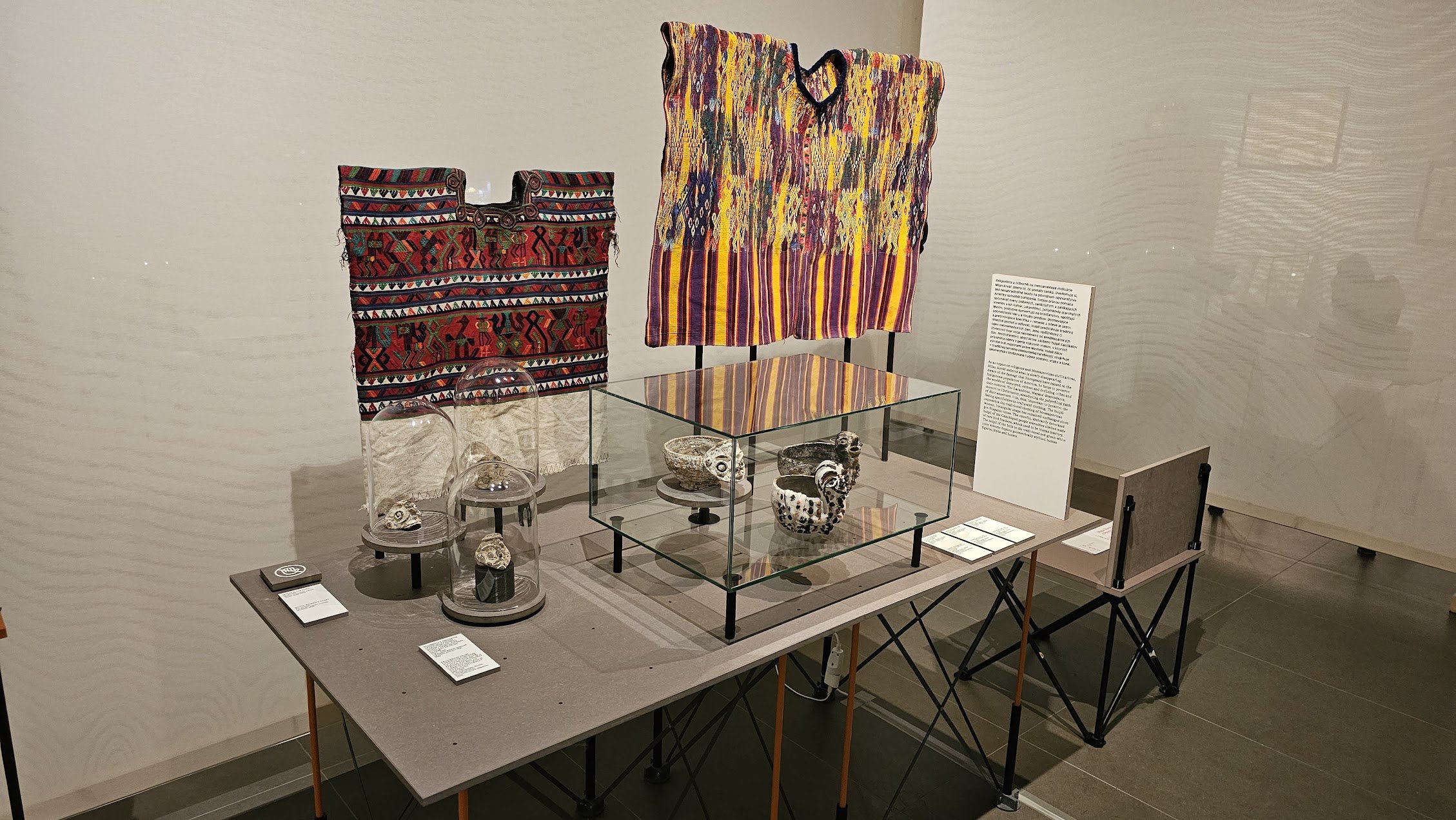
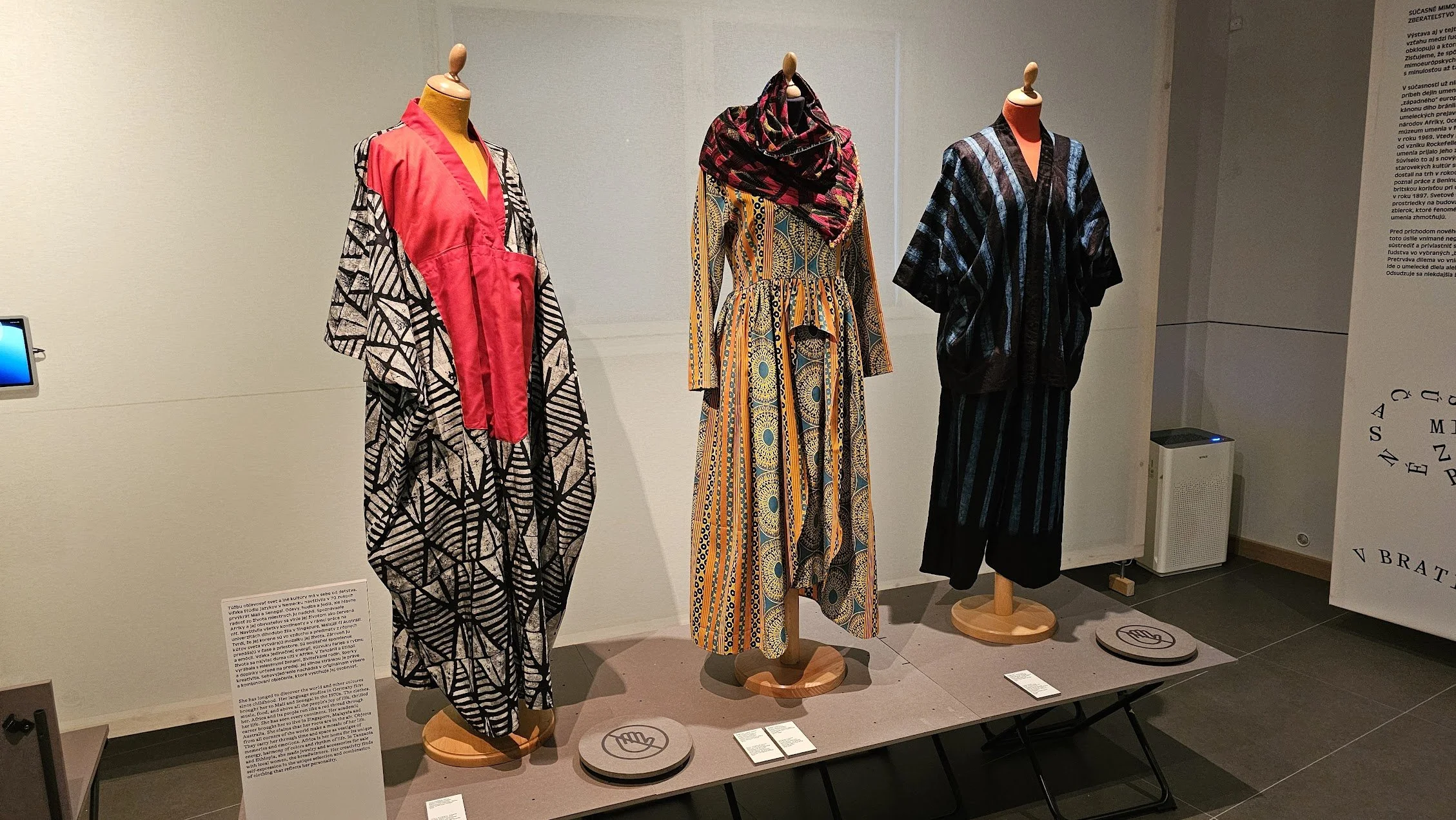
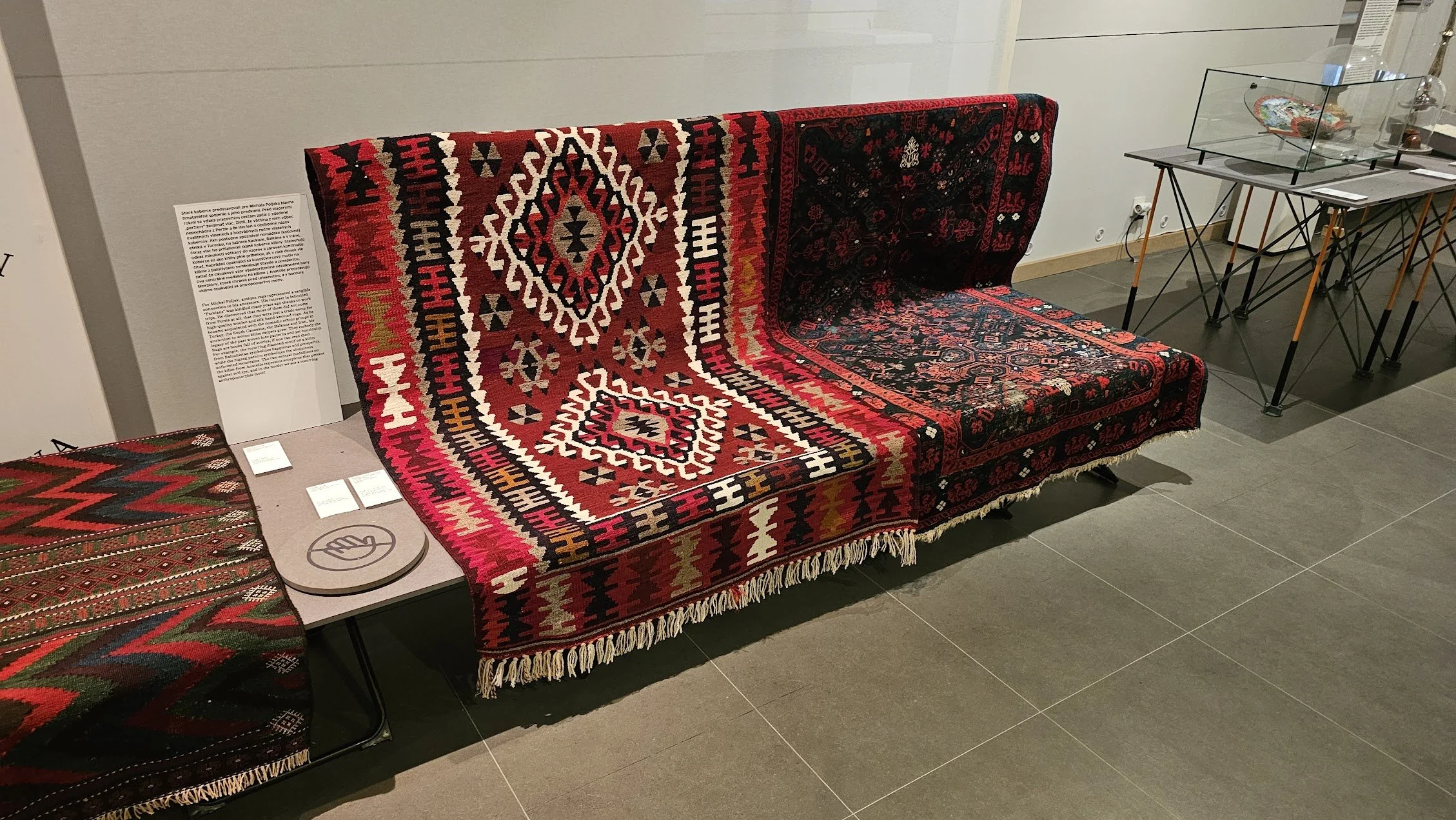
When you were undertaking research for the exhibition, were you surprised by anything you came across? In other words, how familiar were you with the collections of the museum before you began preparing the exhibition?
At the very beginning, I assumed that the museum’s holdings comprised only around one hundred objects, inventoried within a sub-collection titled General Ethnography (Všeobecná etnografia). Gradually, however, it became clear that relevant items were dispersed across several other sub-collections, including Arts and Crafts, Weapons, Pharmacy, and Ethnography, among others. It was therefore necessary to locate, identify, and assess all the objects in question and evaluate their suitability for exhibition. At present, I have identified approximately 300 artefacts. At least another hundred objects did not survive due to the degradation of natural materials and, in some cases, insufficiently sensitive handling in the past.
The unexpectedly rapid growth in the number of artefacts eventually became a challenge. As I was working at the museum only part-time and postponing the exhibition (and publication) was not an option, I had to reconsider the project’s scope and timeline. At a certain point, I decided to narrow the research focus to the earliest acquisitions—from the second half of the nineteenth century and the interwar period. My aim was to contextualise both the collectors and the artefacts themselves, which was still feasible for the period up to the Second World War. In contrast, the provenance of objects acquired after 1945 often cannot be satisfactorily traced due to a lack of archival documentation. The most favourable scenario involves documented purchases from antique shops; the most problematic involves transfers of furniture and objects from Socialist City National Committees, where items likely originated as confiscated property—first from Jewish owners and later from members of the nobility.
All exhibitions involve having to make compromises about what to include and what to exclude. Were there any items you would have liked to include that you could not put on display?
With regard to objects owned by the museum, I did not have to exclude any items from the selection. However, I was forced to withdraw several planned international loans due to inadequate climate conditions in the exhibition spaces. In the opening section of the exhibition, which focuses on the museum’s collection, my curatorial intention was to present the artefacts in a composition of thirteen “islands,” organised along thematic principles. Although it would have been easier to arrange the objects along a single long table, given the limitations of the lighting system, such a display might have unintentionally created a colonial “buffet table” effect of exoticism and curiosities—an approach I deliberately sought to avoid.
The second part of the exhibition, devoted to contemporary city-based collectors, gradually assumed its current form. Conversations with collectors, and efforts to understand their motivations for surrounding themselves with objects from other cultures, helped temper my initially more confrontational decolonial stance, leading instead toward a more nuanced and open perspective.
The attentive visitor will notice that the narratives of both sections of the exhibition intersect and complement one another, forming broader thematic connections. One such theme concerns mystifications and incorrectly assembled groupings of non-European objects within European museum collections. The Bratislava City Museum is no exception. For example, a set of items recorded under a single inventory number was once assumed to represent an “African warrior,” consisting of a shield, a necklace, and a grass skirt. However, these objects could not possibly form an authentic unit. The ula lei necklace, made from pygmy sperm whale teeth, originates from Fiji in Oceania, while the Nguni leather battle shield was used by various ethnic groups in southern Africa. This historical example resonates with objects displayed in the second section of the exhibition, particularly those belonging to a contemporary Bratislava historian whom I refer to as collector ludens—the playful collector. His eclectic, cross-cultural compositions deliberately blend artefacts from diverse origins, thereby confusing and amusing both experts and lay audiences. Yet such assemblages also demonstrate how easily meanings can shift. If objects enter a museum collection without proper documentation and contextualisation, they can present significant challenges for future custodians and curators, who would be tasked with disentangling their origins and intentions.
The only significant shortcoming I perceive is that I was unable to meaningfully integrate representatives of source communities into the exhibition narrative. Doing so would have required additional time and resources that were not available.
What do you hope the public might learn from the exhibition? What does it reveal about Slovak culture and history?
I wanted a decolonial narrative to unfold gradually throughout the exhibition rather than being imposed in a didactic or confrontational manner. The case of the painter Eduard Majsch is particularly illuminating in this context. He bequeathed his collection to the museum in 1903. Objects crafted in Asia and the Ottoman Empire frequently appear as props in his still-lives, genre scenes, and self-portraits, reflecting both his personal interests and the broader fascination with exoticism at the turn of the century. When guiding visitors, I often refer to a curious episode connected to this phenomenon: the activities of the Bratislava-based German-language singing society Liedertafel, which regularly organised balls and masquerade events known as “fools’ evenings.” In response to the First Sino-Japanese War (1894–1895), which ended in China’s defeat, the choir staged a “Sino-Japanese Fools’ Evening.” The decoration included 400 lanterns, numerous parasols, a throne with a statue of Buddha, and a pagoda. From today’s perspective, the programme also featured a highly problematic and openly mocking performance intended to imitate the arrival of the Chinese emperor, accompanied by music. Upon his ceremonial entrance, an assassination attempt was staged; when it failed, the assassin committed hara-kiri. Immediately afterwards, a Japanese battleship appeared and “bombarded” the audience with flowers, sweets, and balls. The courtyard and hall decorations were designed by Eduard Majsch himself, who was also a member of the singing society. To help visitors grasp the implications of such an event, I ask them to imagine responding in a similar manner to the current Russian–Ukrainian war. I can almost see the moment when visitors recognise and understand that decolonial thinking is not merely theoretical, but deeply embedded in everyday cultural practice.
The second section of the exhibition, which thematises the relationship between six Bratislava-based individuals and the non-European objects with which they surround themselves, is crucial in this respect.
This part of the exhibition welcomes visitors with the gaze of anthropomorphic statues belonging to one of the collectors—an individual who collects art across historical periods and has created, in his private home, a small-scale version of an encyclopaedic museum collection. My curatorial aim was to identify and present objects that serve as bearers of stories about diversity, creativity, sharing, but also destruction, stealing and trafficking the cultural goods. A selection of iconic busts and figures representing deities, spiritual beings, and ancestors proved particularly effective in this regard.
At the same time, this choice acknowledges the criterion of controversy, as the ownership of such artefacts is frequently the subject of postcolonial critique. The exhibition reveals that the motivations and mechanisms behind the acquisition of non-European objects have not fundamentally changed over time. What has changed, however, is the mindset. Rather than rejecting collecting practices outright, I sought to examine the varied approaches and degrees of personal engagement through which Europeans relate to—and position themselves in relation to—other cultures.
What kind of response has the exhibition had from the public or in the media?
Personal, one-to-one encounters with visitors have been very encouraging. Many demonstrated a genuine willingness to engage openly and reconsider their perspectives. Slovaks, like many other nations, often perceive themselves primarily as historical victims of oppressive imperial powers, while at the same time displaying a strong and sometimes uncritical orientation toward the West. The exhibition addresses unequal distributions of power, differing circumstances and motivations for travel, and the conditions under which encounters with other cultures have taken place. These themes resonate with visitors and frequently prompt thoughtful responses.
Foreign visitors living in Slovakia expressed a particular appreciation for the exhibition, noting that it offers them a sense of recognition and, in some cases, even a feeling of homecoming.
In contrast, the exhibition received almost no media coverage. This may partly reflect the current situation in Slovak culture. There are “larger fish to fry”—urgent and existential concerns related to the ongoing erosion and destabilisation of the cultural sphere in Slovakia, developments being orchestrated by the Ministry of Culture. In such a climate and even before, decolonisation never truly entered public debate, and the present circumstances leave little room for what some people might regard as eccentric forms of self-questioning and critical self-reflection.
Do you think the exhibition is a model that could be used in other museums?
I am convinced that provenance research is the most appropriate starting point for any collection-based decolonial initiative in Slovakia (and not only), particularly because it remains significantly underdeveloped. A thorough understanding of the historical and social contexts in which non-European objects were collected provides a solid foundation for building meaningful exhibition strategies and narratives. Without such research, decolonial discourse risks remaining abstract or rhetorical rather than grounded in material evidence.
On the basis of carefully reconstructed provenance and contextual knowledge, it becomes possible to frame exhibitions that critically address questions of power, ownership, representation, and historical responsibility.
On a more personal note, I have always tried to “listen” to what the objects themselves communicate and to reflect on where and how they should be exhibited. The spatial conditions of an exhibition venue—often perceived as limitations—together with the quality and nature of the core material, can in fact illuminate the path for the curator. These parameters shape and refine the curatorial vision rather than restrict it, guiding the development of an exhibition concept that responds sensitively to both objects and space.